
The seventh round of this year’s World Rally Championship roars into life amidst the searing dust and brutal terrain of the Acropolis Rally—one of the sport’s most storied and demanding arenas. This year, Greece closes out a punishing trio of gravel rallies in southern Europe, with the event staged unusually early, at the end of June, rather than its traditional September slot.
The Acropolis Rally has long been a synonym for hardship in the WRC calendar—but this year, the searing summer heat promises to turn up the intensity yet another notch. With ambient temperatures expected to soar towards 40°C, crews and cars alike will face a true crucible of endurance across the jagged mountain tracks and sunbaked valleys of central Greece.
While the route largely adheres to its familiar template together with Lamia based rally HQ, the ceremonial start makes its return to the iconic city of Athens. There, beneath the gaze of antiquity, competitors will launch their campaigns from the historic Panathenaic Stadium—site of the first modern Olympic Games in 1896, and a place where sport has echoed since time immemorial.
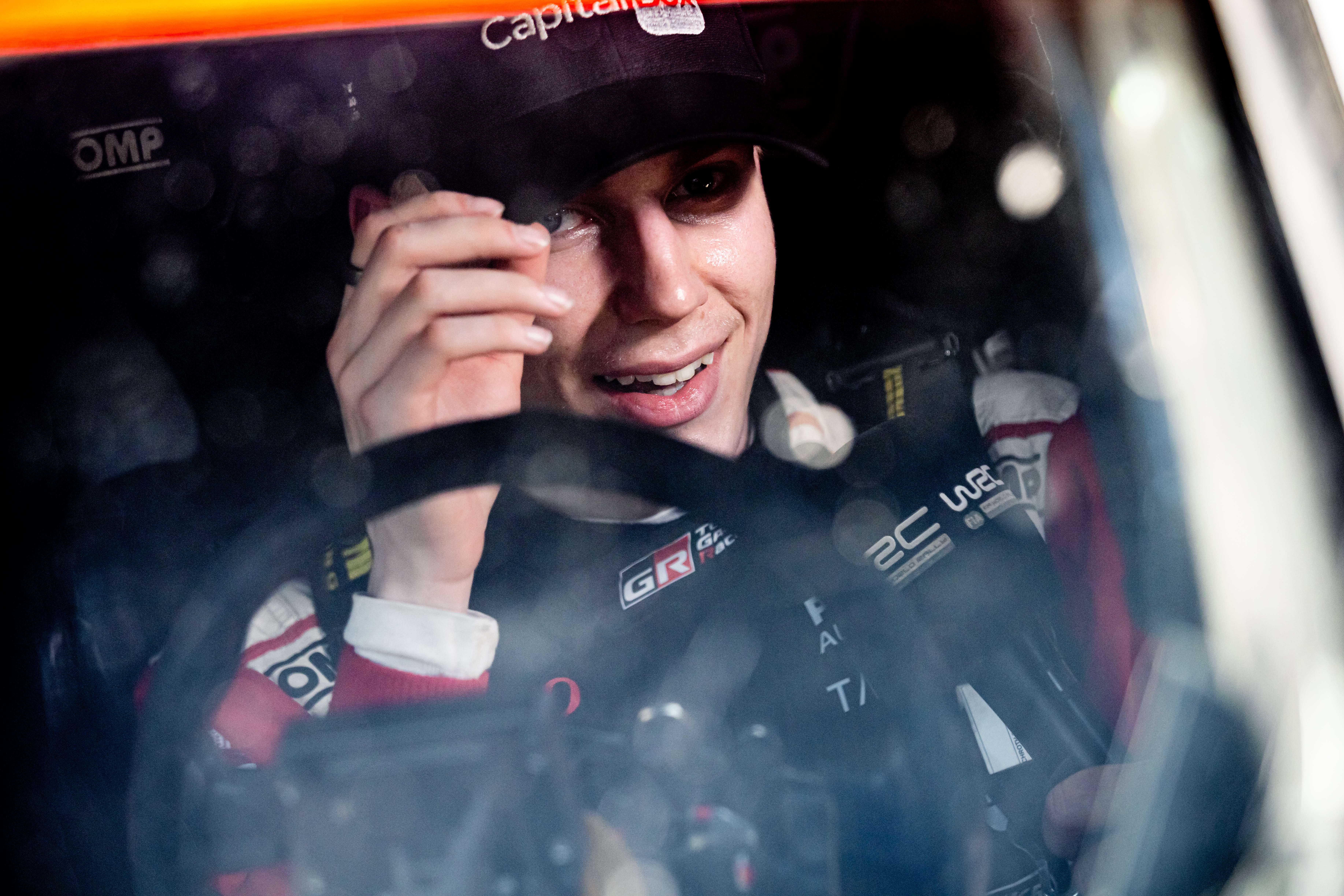
For Sami Pajari, this rally is more than just another date on the calendar. The rising Finnish star boasts three prior outings in Greece, his fondest memory coming just last year when he stormed to victory in the WRC2 category.
“Having these gravel rallies in succession is hugely beneficial for me,” Pajari explains. “They help build experience and confidence. In Portugal, we managed a clean rally, and in Sardinia the pace started to come more naturally—so I’m hopeful we can carry that progression into Greece. I have great memories of last year’s win here, and I’m eager to build on that.”
Driving the Toyota GR Yaris Rally1, Pajari recently joined his Toyota Gazoo Racing teammates for a dedicated test session for the Greek conditions.
“In events like this, especially in the lower categories, you have to be extremely careful with the car’s condition,” Pajari notes. “But the Rally1 cars can take so much more punishment, you have to learn to trust it and adapt to pushing harder. That’s the mental shift I’m working on.”
The action begins in earnest on Thursday morning with a shakedown near Lamia, before attention turns once more to Athens for the ceremonial start—set against the backdrop of one of sport’s most majestic venues. Barely a quarter of an hour later, the opening super special stage will blast off from the nearby park, a high-octane prelude to the drama ahead.
Thursday night sees the convoy transfer west to Loutraki, where Friday’s itinerary gets underway with two stages in the surrounding hills. A service break at Loutraki Casino—near the iconic Corinth Canal—punctuates the day, followed by a long haul northeast to Lamia, incorporating three more stages. Among them is Stiri, unseen in WRC since 1997, adding a nostalgic twist to the challenge. Friday’s total competitive distance stands at 121.76 kilometres across six stages.
Saturday presents another punishing slate: six stages looping south and southwest of Lamia, including a mid-day service interval before the day’s remaining kilometres are tackled. In all, 123.44 kilometres of competitive action await.
Sunday’s finale ventures northwest of Lamia and features four stages. Among them is the all-new Smokovo stage as well as the legendary Tarzan, a name that evokes the very spirit of Greek rallying. A repeat of Smokovo and one final blast through Tarzan—as the Power Stage—will draw the curtain on this punishing contest, with Sunday’s action totalling 99.06 competitive kilometres.
As ever in Greece, it will not be merely a question of speed, but survival. For Sami Pajari, the Acropolis Rally offers a chance not just to compete—but to carve his name deeper into the pantheon of rallying’s history.