
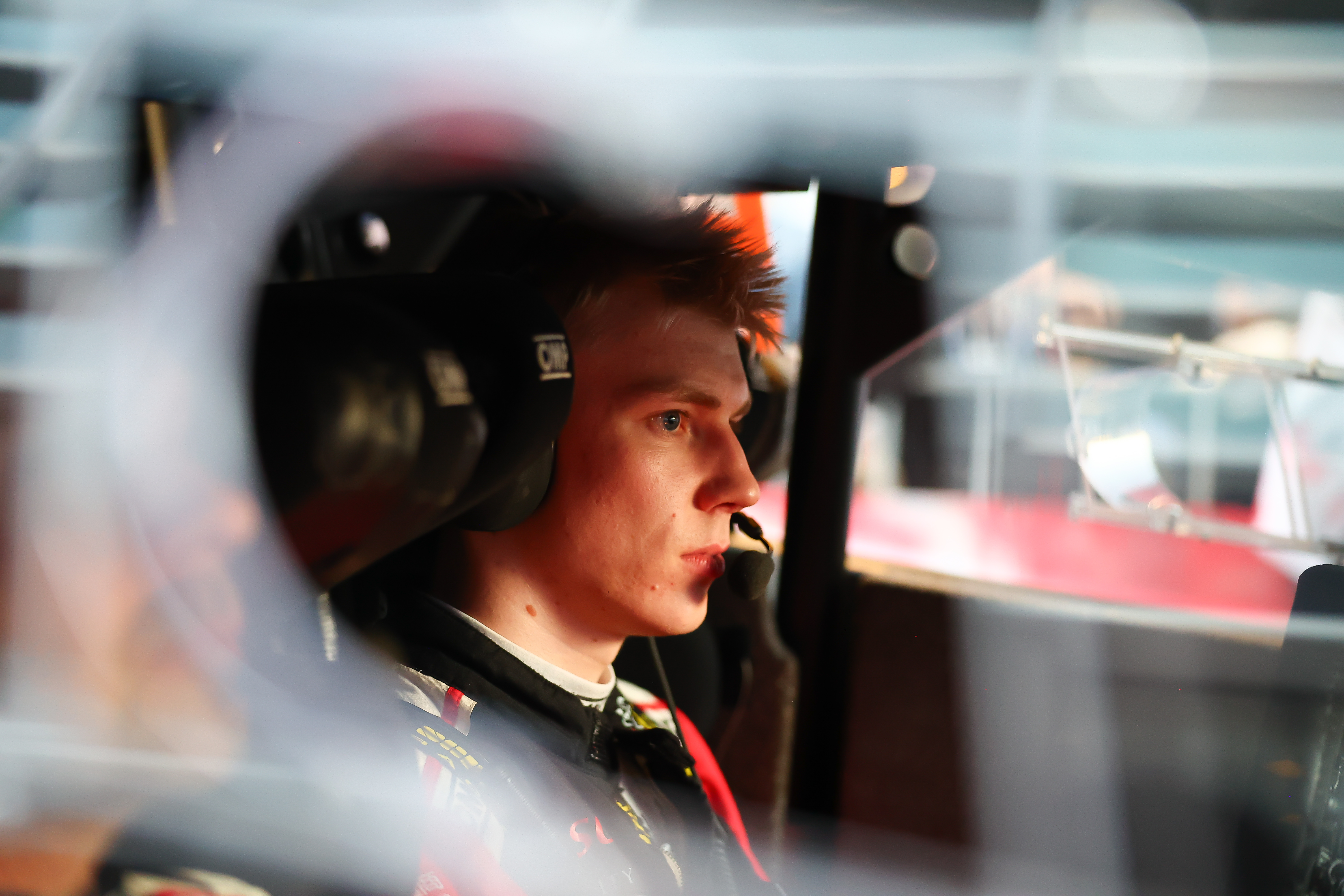
The fourteenth and final round of this year’s World Rally Championship unfolds beneath the blazing Saudi Arabian sun—a wholly uncharted experience for the entire field, as the kingdom makes its inaugural appearance on the WRC calendar. Finland’s Toyota Gazoo Racing WRT2 pairing, Sami Pajari and Marko Salminen, arrive in buoyant spirits, having secured a fine third place on the podium in Japan.
For the WRC family, Saudi Arabia represents a genuine step into the unknown. The route promises a beguiling mixture of narrow, technical stretches—where treacherous rocks lurk menacingly at the edges—and fast, sweeping expanses of open terrain. Surfaces vary from hard and abrasive to unexpectedly soft. Early conjecture suggests conditions may echo an intriguing blend of Greece and Kenya, an assessment with which Pajari himself finds agreement.
“Claiming our first podium in Japan was truly special,” Pajari reflects. “It showed that we’ve progressed in the right direction during our first proper season in Rally1 machinery. Now, as the year concludes, we head into something entirely new in Saudi Arabia. Nobody quite knows what to expect, but I’m looking forward to it enormously.”
“I imagine there may be elements reminiscent of Kenya. There, we relied on a measured approach—one that paid off handsomely. As for road durability, we’ll likely discover the truth only once the rally begins, but I expect we’ll encounter a little bit of everything.”
The Saudi Arabian round commences unusually on Wednesday evening and culminates early Saturday afternoon. Over four days, crews will tackle 17 special stages, amounting to 319.64 kilometres of competitive running. The rally’s operational heart lies in Jeddah, on the western edge of the country along the Red Sea coast.
Unlike several recent events where weather forecasts kept teams guessing, there will be no such ambiguity here: daytime temperatures are expected to soar to 35°C, with nights remaining stubbornly above 25°C. Humidity stays low during daylight but rises markedly once the sun dips below the horizon.
European rally aficionados who endured nocturnal viewing for Japan will enjoy more forgiving hours this time. The competitive days are neatly divided: an intense morning loop of roughly two hours, followed by a break, and a corresponding afternoon run.
Wednesday evening offers only a short, five-kilometre spectator stage situated directly beside the service park in Jeddah.
On Thursday, the field heads north and northeast for a trio of special stages repeated twice, interspersed with a return to Jeddah for service. The day concludes with a reprise of the opening spectator stage adjacent to the service zone. Thursday’s competitive distance totals 106.84 kilometres, representing 33% of the entire rally.
Friday’s stages lie closer to Jeddah, to the northeast and east. Once more, a loop of three tests is driven twice, with a full service interval in the middle. There will be no running after sunset, bringing the day to a close several hours earlier than Thursday. Friday accounts for the longest mileage, with 141.72 kilometres—fully 44% of the rally’s competitive distance.
On Saturday, the crews venture north once again, though not as far as on Thursday. Two special stages are contested during the morning before a regroup, leading into the season-ending challenge: the second pass of Thabha, the final stage of the entire 2024 WRC campaign. Saturday contributes 65.86 kilometres, equating to 21% of the rally’s total.