
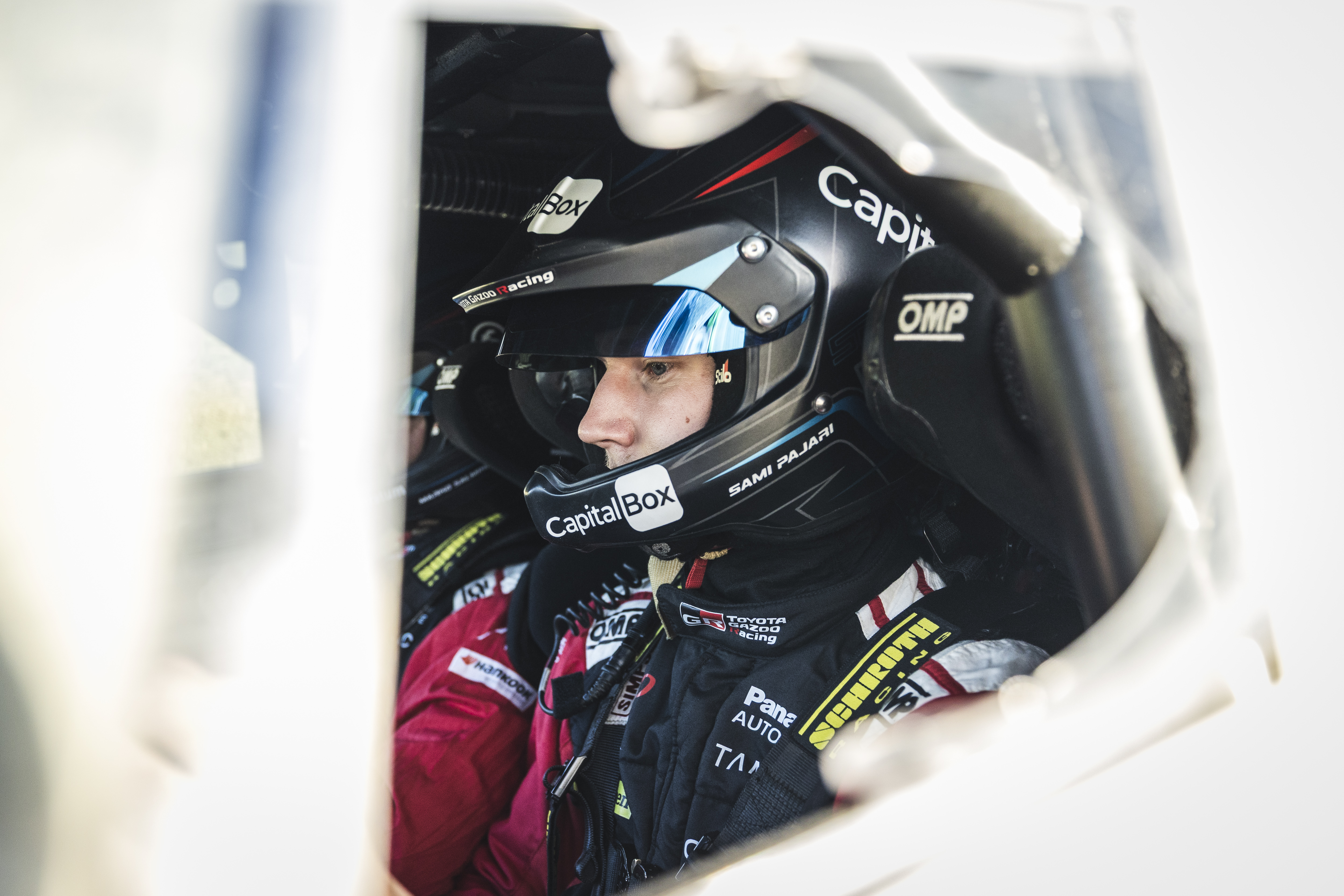
The Central European Rally returns to the FIA World Rally Championship calendar for the third consecutive year, once again unfolding across the tarmac roads of three nations. As the twelfth round in a fourteen-event season, it marks only the third asphalt rally of the campaign – following Monte Carlo and the Canary Islands earlier in the year.
For Sami Pajari and co-driver Marko Salminen, the return to sealed surfaces comes at a moment of confidence. Their form through the latter half of the season has shown steady progression, and both Finns head to Central Europe with optimism and intent.
Challenging Roads Across Three Nations
This year’s rally is based in Passau, a picturesque city in southeastern Bavaria near the Austrian border, and less than an hour’s drive from the Czech Republic. Across four days, crews will contest 18 special stages totalling just over 306 competitive kilometres. While some stage names may echo previous editions, most routes have been revised, ensuring a fresh challenge for competitors.
Although the course does not reach the steepest Alpine passes, the blend of forest roads and open farmland provides a striking backdrop, with the highest points of the route approaching 1,000 metres above sea level.
“We’ve had rallies lately where our pace has been strong, and it’s been a real pleasure to push hard while fighting for positions,” said Pajari. “Now we face another new challenge, but there’s no reason we can’t deliver another good result.
I really enjoy driving on asphalt, and our pace on sealed surfaces has felt good — it was already encouraging last year when I competed here in a Rally1 car. Some of the stages were excellent, just as they were in the Canary Islands earlier this year, even though we unfortunately didn’t reach the finish there.
This rally can be tricky in places, and the weather always adds an extra layer of unpredictability, but I’m genuinely looking forward to it.”
A Detailed Look at the Route
The rally begins on Thursday afternoon with two runs of the Golf und Therme stage, southwest of Passau, measuring just under 13 kilometres. Earlier that morning, the same stage will host the shakedown in a shortened format.
Friday’s leg takes crews northeast on a three-nation tour. The opening test, Granit und Wald (10.86 km), is notably shorter than its 20-kilometre version from last year. From there, competitors cross into Austria for Böhmerwald (15.27 km), a stage familiar in name from 2023 but with only brief sections repeated. The third stage, Col de Jan (23.37 km), introduces an entirely new challenge in the Czech Republic.
After a midday tyre-fitting zone in Kaplice, crews repeat the morning stages in reverse order before returning to Passau for evening service. The day totals 99 kilometres of competitive action.
Saturday’s route extends northeast towards the Czech border. The opening stage, Made in FRG (14.3 km), is a new addition; its title refers not to the former West Germany, but to the Freyung-Grafenau region where it is located. The itinerary continues into the Czech Republic for Keply (21.95 km), another debut stage, followed by Klatovy (15.57 km), partially familiar from last season. After a tyre change in Klatovy, both Keply and Klatovy are repeated before crews return to Passau, completing 103.64 km of competition for the day.
Sunday’s decisive leg heads east with Beyond Borders (12.37 km), beginning in Germany and finishing in Austria. The stage is largely unchanged from 2023 but features a new final section. It is followed by Mühltal (26.52 km), the longest test of the rally, run entirely in Austria and incorporating segments from two years ago. After a regroup in Rohrbach-Berg, the Power Stage sees Mühltal tackled once more in the early afternoon. In total, Sunday’s stages cover 77.78 km.
With the rally’s unique cross-border character, narrow tarmac lanes, and potentially changeable autumn weather, the Central European Rally demands exceptional precision, adaptability, and control.