
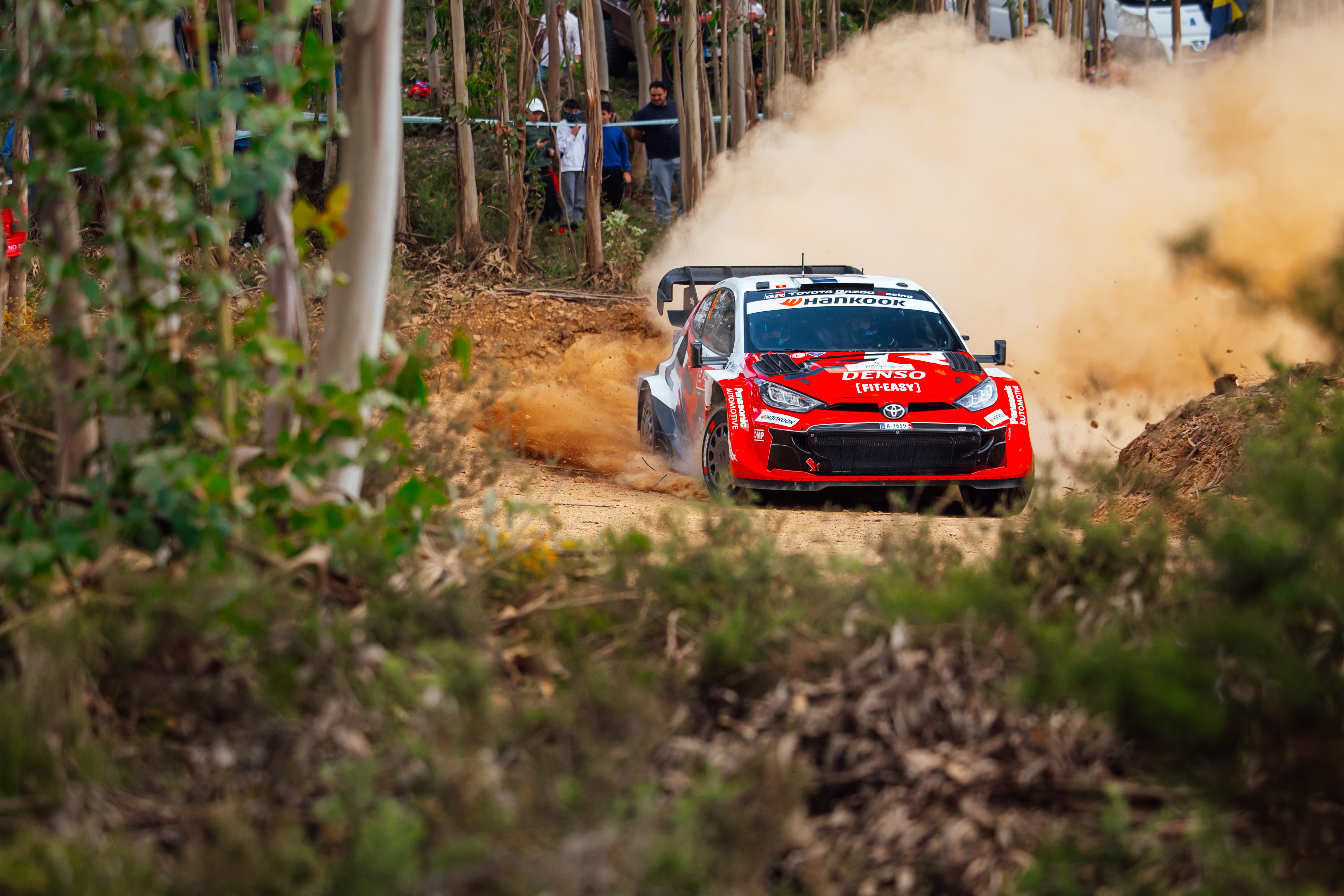
The sixth round of the FIA World Rally Championship season gets underway in Portugal on Thursday, May 7. The Toyota Gazoo Racing WRT2 crew of Sami Pajari – Marko Salminen, who have secured podium finishes in the previous four rounds, head into the event from third place in the championship standings. After using last year’s Rally Portugal as a learning experience with the Rally1 car, the Finnish duo now aims to apply those lessons and maximise their performance.
Portugal will mark Pajari’s sixth start in the event. His previous results include a second place in 2021 and a victory in 2022 at junior level. His subsequent appearances in WRC2 brought both challenges and flashes of strong pace. Last year, Pajari finished seventh in the top class, and following a strong start to the current season, expectations are now higher.
“I’m really looking forward to getting back on gravel in Portugal,” Pajari said. “It feels like a long time since we last drove a traditional gravel rally, excluding Kenya or Saudi Arabia, which are more specialised events. This will also be the first time we’re starting near the front on gravel, but I can’t complain too much — I’m happy to be in the fight. There are strong drivers starting behind us, like Seb, so it won’t be easy, but hopefully we can continue our strong form.”
Based on Wednesday’s shakedown, Pajari’s pace looked promising. While drivers rarely push to the absolute limit in shakedown, there were clear signs of confidence.
“We’ve had a few podiums in different types of rallies, but that doesn’t make anything easier here. You still have to start each rally with a clear mind. Our tests went well, and the feeling with the car has been good. The same applied in shakedown — everything feels ready for the rally. It definitely won’t be easy, especially as the weather forecast suggests a chance of rain later in the weekend, which could make conditions very interesting.”
The rally route largely follows the familiar format of recent years, featuring 23 special stages covering a total of 344,91 kilometres.
The ceremonial start takes place on Thursday in Coimbra, approximately 125 kilometres south of Porto. In the afternoon, crews tackle two stages located between the two cities, followed by a visit to the coastal town of Figueira da Foz. The day concludes with a spectator stage along the beachfront streets, slightly modified from previous years. Only a tyre-fitting zone is available afterwards before the overnight halt, meaning any damage sustained on Thursday cannot be fully repaired until Friday. Thursday’s stages total 37,25 kilometres.
Friday begins early, with stages northeast and east of Coimbra in the Arganil region. The Mortágua stage remains unchanged, while Arganil will be run in reverse direction — reportedly for the first time at WRC level since 2001. The Lousã stage also returns in a reversed format, last seen in this direction as far back as 1985, when Walter Röhrl set the fastest times.
After a midday regroup and remote service in Arganil, the afternoon loop features the same stages in reverse order, with the addition of the Góis stage, also run in reverse compared to last year. Crews then head to the rally base in Matosinhos, near Porto. Friday’s competitive distance totals 96,22 kilometres.
Saturday heads east and northeast from Porto into the inland regions. The first two stages are unchanged, while the highlight of the day is the iconic Amarante stage, shortened this year to 26,24 kilometres but still the longest of the rally.
The Paredes stage follows, partly familiar from the shakedown, featuring a winding layout that even finishes on a circuit section. After a full service in Matosinhos, the stages are repeated in the afternoon, before the day concludes with the popular Lousada spectator stage at a rallycross circuit. Saturday is the longest day of the rally, covering 145,88 kilometres, accounting for around 42% of the total stage distance.
Sunday features two stages run twice in the same region as Saturday. Vieira do Minho opens the day with a slightly revised start, while the famous Fafe stage remains unchanged and continues to be one of the most iconic stages in the WRC calendar. Its legendary jump near the finish is expected to attract huge crowds once again.
A regroup takes place before the final run through Fafe, which serves as the rally-ending Power Stage. Sunday’s total distance is 65,56 kilometres.