
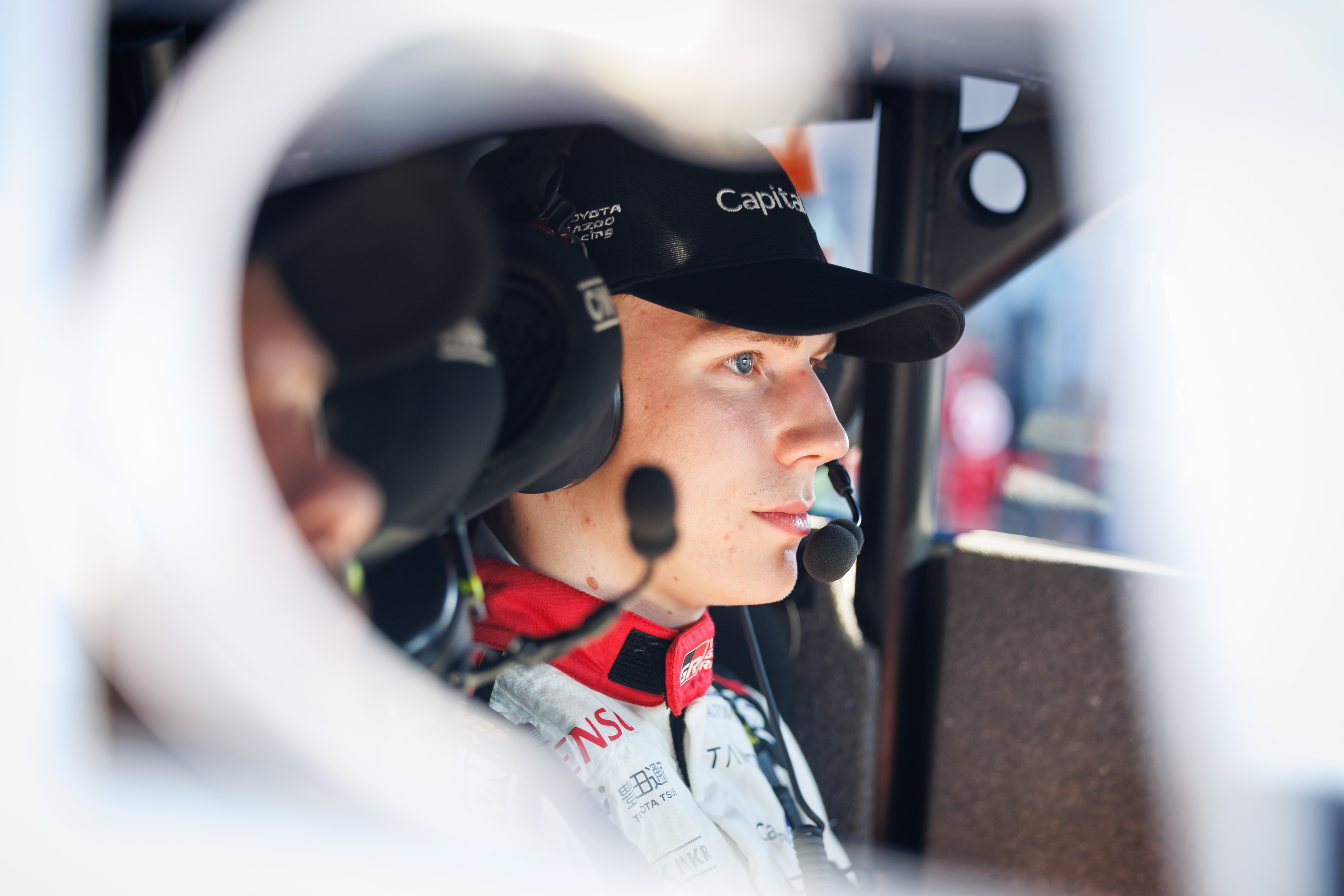
The FIA World Rally Championship continues next weekend with Rally Estonia, the ninth round of the 2026 season. Once again, the event serves as the perfect dress rehearsal for Rally Finland. Since making its WRC debut in 2020, Rally Estonia has been a regular fixture on the calendar, with the exception of 2024. Last year, Toyota Gazoo Racing WRT2 crew Sami Pajari and Marko Salminen finished seventh in Estonia aboard the Toyota GR Yaris Rally1. Looking further back, however, Pajari has many successful memories from the event.
With Rally Estonia taking place during the most popular summer holiday month for Finns, a strong contingent of Finnish fans is always present, and this year will be no exception. For the most dedicated supporters, the coming weeks are a true highlight of the season, with two WRC events taking place only a few hundred kilometres apart.
Rally Estonia and Rally Finland are the fastest gravel rallies of the year, and this season they also mark the final appearances of the Rally1 cars on roads of this nature, adding a degree of historical significance to both events.
While Estonia is known for its ultra-fast stages, the rally also features more technical sections where the forests are close to the road and the soft sandy surface becomes heavily rutted, especially on the second pass. Compared to Finland, there are very few ditches and far fewer natural jumps. In some places, organisers have even created artificial crests over the years to provide spectators with spectacular airborne moments.
Last year, Pajari approached the rally with a measured pace, continuing to learn the characteristics and limits of the Rally1 car in competition. This season has been a different story. His pace has been consistently strong throughout the year, resulting in five podium finishes so far.
In the junior and support categories, Rally Estonia has been one of the Finn’s most successful events, providing plenty of positive memories: second place in JWRC in 2020, a JWRC victory in 2021, JWRC and WRC3 victories in 2022, and second place in WRC2 in 2023.
“I’m really looking forward to these next two rallies in Estonia and Finland: they are my favourite ones on the calendar. I’m pretty happy with how we finished the last rally in Greece after a difficult start, we’re still in a good position in the championship, and at the same time our starting position should not be too bad for the next rallies and should allow us to be in the fight, so let’s see what we can do.”
Compared to last year, the rally route is slightly shorter in terms of special stages. There are two fewer stages this time, with 18 in total covering 301.8 competitive kilometres – 6.55 kilometres less than in 2025. The stage names will be very familiar, and in fact the route is largely identical to last year’s. The only notable change is on Saturday afternoon, when the Otepää stage, run twice, features around seven kilometres of new road towards the end that was not used last year.
The ceremonial start takes place on Thursday evening in Tartu Town Hall Square at around 18:30, but the competitive schedule has been condensed, with both the shakedown and the first special stages taking place on Friday.
While last year’s rally began with a short spectator stage, this year’s opening will immediately put the crews to work. The 21.45-kilometre Raanitsa stage gets the action underway at 13:03 on Friday, followed by Karaski and Kanepi before the crews head to Otepää for a tyre-fitting zone.
With fresh tyres fitted, the same three stages are repeated before the day concludes with the asphalt-based Elva city stage. As in 2025, Friday features seven special stages, but this year they total 103.42 kilometres compared to more than 120 kilometres last year.
Saturday begins with the crews heading north from Tartu. Once again, the day opens with a long test, as Peipsiääre stretches 24.35 kilometres, meaning drivers will need to be fully focused from the outset. The following Mustvee stage is considerably shorter at 10.67 kilometres. Both stages are run twice before the field returns to Tartu for the midday service.
The afternoon loop heads south towards Otepää, beginning with the 23.74-kilometre Kambja stage. A regroup takes place in Otepää before Otepää 1 and Kambja 2, followed by another regroup ahead of Otepää 2 and the closing Tartu Vald stage, located close to the service park. Saturday again features nine special stages, but this year they cover 149.6 kilometres compared to just under 126 kilometres in 2025.
On Sunday, accurate pace notes will be more important than ever, with a significant number of points available relative to the day’s mileage. The crews head south from Tartu to the Otepää region, where the 24.39-kilometre Kääriku stage is run before a regroup in Otepää.
The crews then return to tackle Kääriku again as the Power Stage, starting at 13:15. Both the Power Stage points and the Super Sunday points will be decided solely on this stage. Sunday’s competitive distance totals 48.78 kilometres. Last year, Sunday included one additional stage and just over 60 competitive kilometres.